Minneapolis Shooting Ice Video and Official Claims
The fatal shooting of a woman by a federal immigration officer in Minneapolis has ignited national controversy, exposing stark contradictions between official government statements and video evidence reviewed by journalists. While top federal officials, including President Donald Trump, quickly characterized the incident as a violent attack on law enforcement, multiple videos of the encounter suggest a far more complex and ambiguous sequence of events.
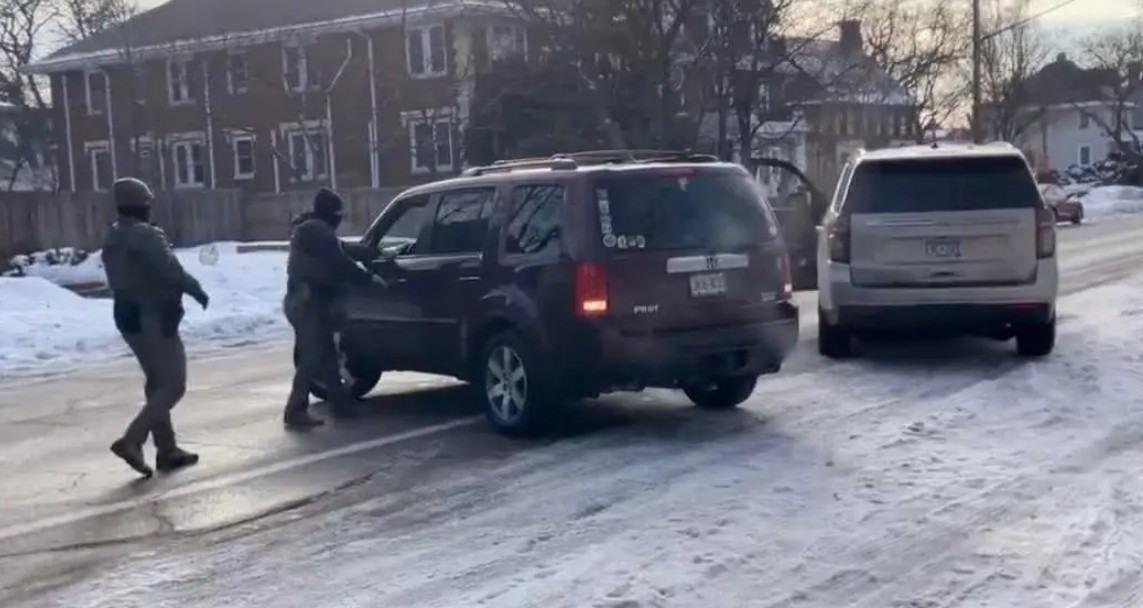
The shooting occurred Wednesday during what authorities described as an enforcement operation involving officers from U.S. Immigration and Customs Enforcement (ICE). The woman, later identified as 37-year-old Renee Nicole Good, was shot and killed by an officer after a brief but rapidly escalating confrontation involving her vehicle. What precisely happened in the moments leading up to the shooting remains unclear, but video footage reviewed by CNN has raised significant questions about the accuracy of early official claims.
Contents
- Swift and Forceful Official Narratives and Video
- Identification of the Victim
- DHS Leadership Reinforces the Attack Narrative
- Video Evidence Introduces Nuance
- The Scene Before the Shooting
- Escalation Through Commands and Force
- Vehicle Movement and Officer Positioning
- The Shooting Captured on Camera
- Chaotic Aftermath
- Contradictions and Unanswered Questions
- Public Scrutiny and Calls for Accountability
- An Incident Still Under Review
Swift and Forceful Official Narratives and Video
In the immediate aftermath of the shooting, President Donald Trump posted online that video evidence showed the woman “violently, willfully, and viciously ran over” an ICE officer. His statement framed the incident as a deliberate and deadly attack on law enforcement, reinforcing a narrative of justified use of lethal force.
Uncensored video of the crime scene in Minneapolis
minneapolis-shooting-ice-video.mp4
The Department of Homeland Security echoed this framing. In an early statement, DHS said the woman attempted to run over officers with her vehicle “to kill them.” The agency’s language left little room for ambiguity, portraying the encounter as a clear case of officers defending their lives against a lethal threat.
Such statements were widely circulated before any video footage had been publicly reviewed or independently analyzed. For critics, the speed and certainty of these claims would later become a focal point of concern.
Identification of the Victim
Later on Wednesday, U.S. Senator Tina Smith of Minnesota publicly identified the woman as Renee Nicole Good, a 37-year-old resident of the state. Her identification brought renewed scrutiny to the case, shifting attention from abstract claims of violence to the death of a specific individual.
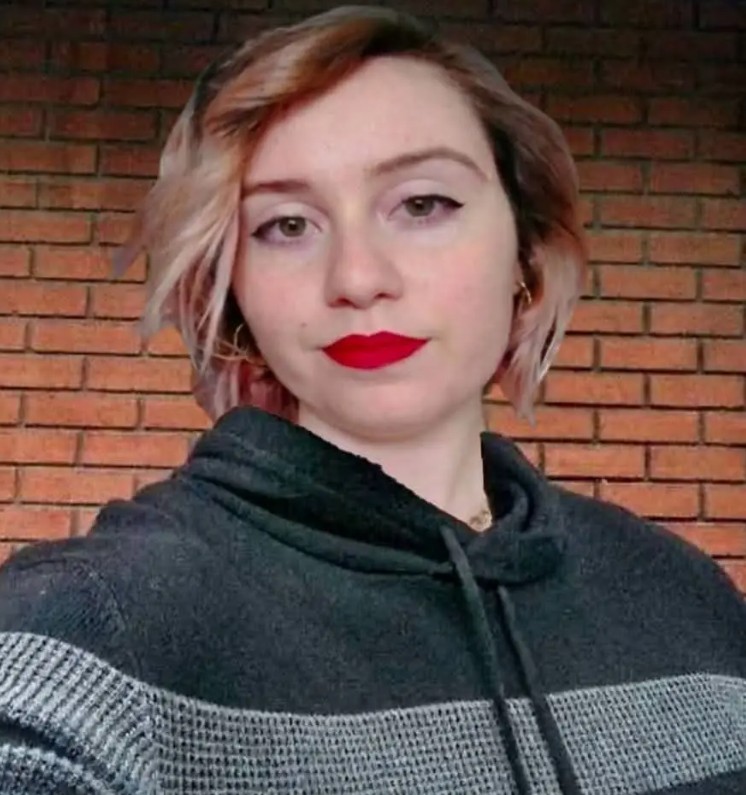
Little personal background information about Good has been released, but her identification prompted calls from lawmakers and civil rights advocates for transparency and restraint in public statements until a full investigation is completed.
DHS Leadership Reinforces the Attack Narrative
DHS Secretary Kristi Noem addressed the incident during a news conference in Texas on Wednesday. She stated that “a woman attacked” officers and “attempted to run them over and ram them with her vehicle.” According to Noem, the officers involved were stuck in snow at the time of the confrontation, further heightening the danger they allegedly faced.
Her remarks reinforced the administration’s central claim that the shooting was a necessary response to an imminent threat. However, these assertions would soon be contrasted sharply with what could actually be seen in multiple videos from the scene.
Video Evidence Introduces Nuance
CNN reviewed three videos taken during the incident, each capturing different angles of the confrontation. Together, they provide a partial but revealing account of what transpired. Importantly, none of the videos clearly show what occurred before the officers approached Good’s vehicle, leaving critical context missing.

What the videos do show, however, is enough to complicate the narrative of a clear, deliberate vehicular attack.
The Scene Before the Shooting
In one widely circulated video, Good can be seen seated in her car, which is stationary and positioned perpendicular in the middle of a street. The vehicle does not appear to be moving as the encounter begins.
An officer, who would later fire the fatal shots, is seen walking behind the vehicle toward its front. Following him is another individual who does not appear to be wearing a uniform and seems to be recording the interaction on a cellphone.
Moments later, a truck carrying two federal officers pulls up to the scene. As the officers exit the truck and approach the car, Good can be seen waving her hand out of the driver’s-side window.
Escalation Through Commands and Force
As the officers approach, they repeatedly shout commands for Good to exit the vehicle. “Get out of the car,” officers can be heard yelling, with one officer using profanity as he repeats the demand.
One officer begins pulling on the driver’s-side door while another moves toward the front of the vehicle from the opposite side. The interaction rapidly escalates from verbal commands to physical force, even though the car remains largely stationary during this phase.
The tension intensifies as the car suddenly begins to move in reverse while one officer continues pulling on the door. Another officer is positioned near the front of the vehicle, placing himself in a potentially dangerous position.
Vehicle Movement and Officer Positioning
As the car transitions from reversing to moving forward, a third officer who has approached the scene draws his pistol and points it at Good while stepping backward away from the front of the vehicle.
This moment appears to be critical. The positioning of officers one near the door, another in front of the car creates a volatile situation in which even slight vehicle movement could be perceived as a threat.
The Shooting Captured on Camera
A second video, recorded from a different angle and obtained by CNN, appears to show the vehicle making contact with the officer before he fires his weapon for the first time. This detail is significant, as it partially aligns with official claims that an officer was struck.
However, the first video does not clearly capture the moment of impact. Instead, it shows the officer’s body moving away from the front of the vehicle toward the driver’s side, suggesting contact but not conclusively demonstrating intentional ramming.
The officer fires his weapon, and moments later, video shows him holstering his pistol as the car continues moving forward.
Chaotic Aftermath
After the shooting, Good’s vehicle accelerates and crashes into a parked car and a utility pole on the side of the street. The footage captures a scene of chaos and confusion rather than a controlled law enforcement response.
The officer who fired the shots, along with the individual filming, approaches the vehicle. At one point, the officer is seen walking away from the car and telling others to call 911. The videos do not clearly show immediate medical aid being administered to Good.
Contradictions and Unanswered Questions
The videos raise serious questions about the early official claims that the woman “violently” and “viciously” attempted to kill officers. While there appears to be contact between the vehicle and at least one officer, the footage does not conclusively show a deliberate or sustained attempt to run officers over.
Additionally, the circumstances that led officers to surround the vehicle, pull on the door, and place themselves in front of the car remain unclear. What happened before the cameras began recording is still unknown.
Public Scrutiny and Calls for Accountability
The release and analysis of the videos have sparked widespread debate online and among civil rights advocates. Critics argue that premature official statements may have shaped public perception before all evidence was reviewed.
The case underscores the growing importance of video evidence in law enforcement encounters and the challenges of interpreting split-second decisions made in high-stress situations.
An Incident Still Under Review
As investigations continue, the death of Renee Nicole Good remains a deeply contested case. While federal officials maintain that officers acted in self-defense, video evidence suggests a more nuanced reality one in which facts, timing, and intent are far from settled.
Until a full and transparent investigation is completed, the Minneapolis shooting stands as another example of how quickly narratives can form and how powerfully video can challenge them.
News -Anthony Joshua Car Crash Accident Video in Nigeria on X/Twitter
Princess Diana Autopsy Details and the Final Medical Explanation
Bondi Beach Shooting Video and The Australia Shooting
Brown University Shooting Video and Leaves Multiple Dead
Anna Kepner Surveillance Video and Family Allegations
Nicole Staples Video and The Alabama Teacher Arrested
Tom Garratt Video Goes Viral and Everything You Need to Know