Ice Shooting Minneapolis Today Full Video and The Minnesota Shooting
A fatal shooting involving a U.S. Customs and Border Patrol (CBP) agent in Minneapolis on Saturday morning has intensified already simmering tensions in the Twin Cities, where daily protests against federal immigration enforcement have become a defining feature of recent weeks. The incident, which left one armed individual dead at the scene, has sparked outrage among bystanders, condemnation from state leadership, and renewed debate over the presence and conduct of federal law enforcement officers in Minnesota.
According to federal officials, the shooting occurred near the intersection of 26th Street West and Nicollet Avenue, an area that quickly became the center of both public scrutiny and protest activity. While the Department of Homeland Security (DHS) has framed the shooting as an act of self-defense, critics argue it is yet another example of excessive force by federal agents operating in civilian neighborhoods.
Contents
- A Deadly Encounter in Broad Daylight and Shooting Full Video
- Eyewitnesses Describe Chaos and Shock
- Federal Authorities Stand by Their Account
- Governor Tim Walz Condemns Federal Presence
- City Officials and Law Enforcement Respond
- Protests Erupt and Tensions Escalate
- A City on Edge After Weeks of Unrest
- Immigration Enforcement and Public Trust
- Looking Ahead
A Deadly Encounter in Broad Daylight and Shooting Full Video
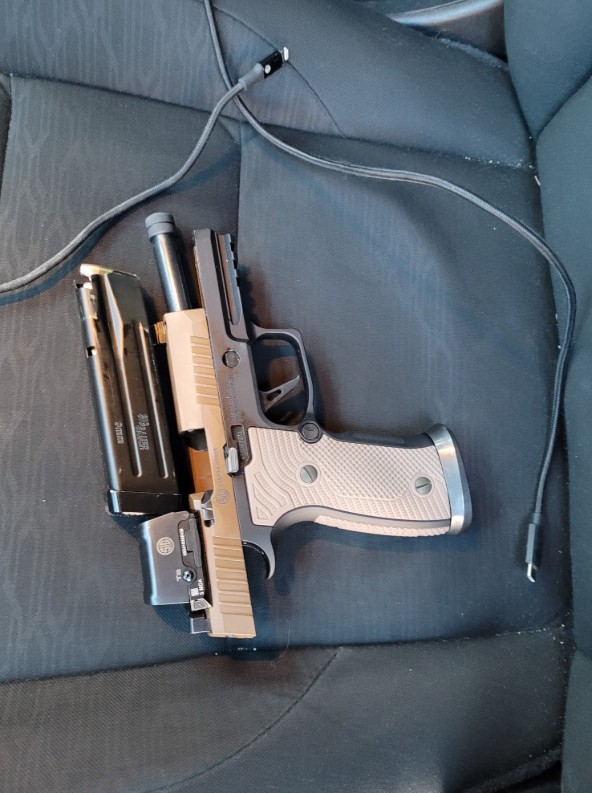
In a statement released Saturday, the Department of Homeland Security said the individual who was killed “approached U.S. Border Patrol officers with a 9 mm semi-automatic handgun.” DHS officials stated that officers attempted to disarm the person, but the situation escalated rapidly.
The Ice Shooting Minneapolis Today Full Video
“The officers attempted to disarm the suspect, but the armed suspect violently resisted,” the statement said. “Fearing for his life and the lives and safety of fellow officers, an agent fired defensive shots.”
The person was pronounced dead at the scene. Authorities did not immediately release the individual’s identity, citing the need to notify next of kin and continue the investigation. DHS also released a photo of the handgun they say the individual was carrying, emphasizing that the presence of a firearm justified the use of deadly force.
Despite this explanation, the lack of publicly available details about what led the individual to confront federal officers has left many unanswered questions. It remains unclear whether the person fired the weapon, made verbal threats, or had any prior interaction with law enforcement before the fatal encounter.
Eyewitnesses Describe Chaos and Shock
A worker at a nearby business told ABC News that they witnessed the shooting and described the aftermath as chaotic and emotionally overwhelming. “We’re currently dealing with the fallout,” the worker said, referring to the police presence, street closures, and the visible distress among community members.
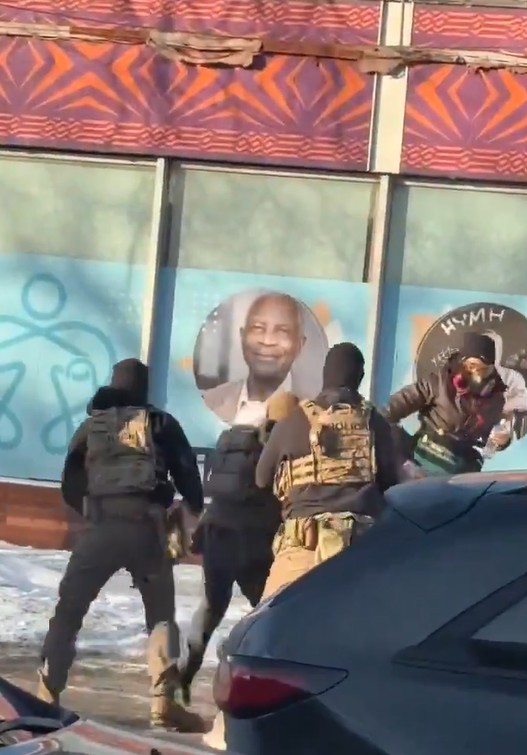
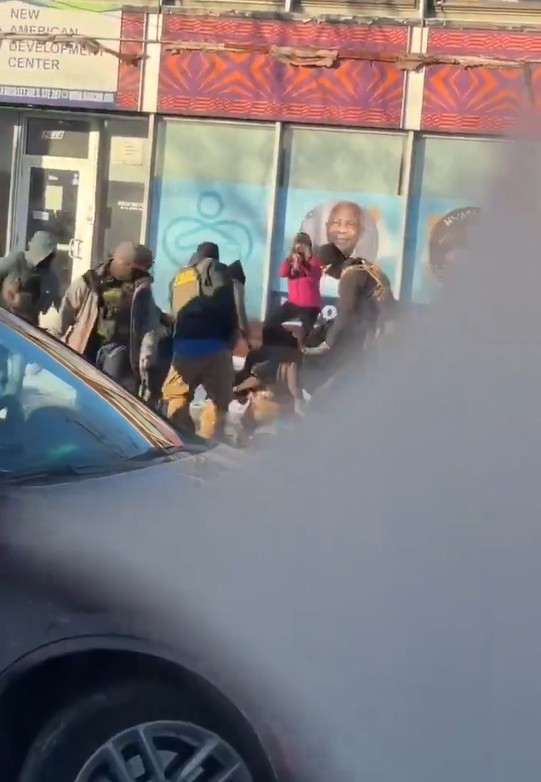
Witnesses described seeing federal officers securing the scene while onlookers gathered nearby, many expressing anger and disbelief. Within minutes, the area transformed from a routine commercial corridor into a flashpoint for confrontation between residents and law enforcement.
Federal Authorities Stand by Their Account
DHS officials have maintained that the shooting was justified and consistent with use-of-force policies. The agency emphasized that Border Patrol agents acted to protect themselves and others in a rapidly evolving and dangerous situation.
However, civil rights advocates and community leaders have questioned why Border Patrol agents were operating in a residential area of Minneapolis in the first place. While federal officials have not detailed the specific mission the officers were conducting, the incident has fueled broader concerns about the scope and visibility of federal immigration enforcement far from the U.S. border.
Governor Tim Walz Condemns Federal Presence
Minnesota Governor Tim Walz responded forcefully to the shooting, saying he had spoken directly with the President about the situation. In a statement that quickly gained national attention, Walz expressed deep frustration with ongoing federal operations in the state.
“Minnesota has had it. This is sickening,” Walz said. “The President must end this operation. Pull the thousands of violent, untrained officers out of Minnesota. Now.”
Walz’s comments reflect a growing rift between state leadership and federal authorities over immigration enforcement tactics. His remarks also underscore the political stakes of the incident, as Minnesota becomes a focal point in the national debate over federal law enforcement authority and accountability.
City Officials and Law Enforcement Respond
The City of Minneapolis acknowledged the shooting in a post on X, stating that officials were investigating reports of a shooting involving federal officers near 26th Street West and Nicollet Avenue. Local authorities have emphasized that the incident involved federal agents, not Minneapolis police officers.
Minnesota State Patrol later issued warnings to crowds gathering near the scene, declaring the protest an “unlawful assembly” and ordering demonstrators to disperse. Despite the tense atmosphere, there were no immediate reports of arrests related to the protest itself.
Protests Erupt and Tensions Escalate
Following the shooting, bystanders confronted federal officers, shouting profanities and accusing them of cowardice. Video footage circulating on social media shows protesters yelling “Go home” at agents, reflecting widespread anger over the federal presence in the city.
Federal agents were seen deploying tear gas to push back demonstrators, further escalating tensions. In one widely shared account, an officer was heard responding mockingly to protesters as he walked away, saying, “Boo hoo.” In another incident, agents were seen shoving a yelling protester into a car.
These moments, captured by witnesses and shared online, have intensified criticism of federal officers’ behavior and raised questions about professionalism and crowd control tactics.
A City on Edge After Weeks of Unrest
The shooting did not occur in isolation. Minneapolis and the broader Twin Cities area have experienced daily protests since the January 7 shooting of 37-year-old Renee Good, who was killed when an Immigration and Customs Enforcement (ICE) officer fired into her vehicle. That incident ignited widespread outrage and set the stage for ongoing demonstrations against federal immigration enforcement.
Just one day before Saturday’s shooting, thousands of demonstrators flooded Minneapolis streets in frigid weather, calling for federal law enforcement agencies to leave the city. Protesters argue that the increased federal presence has made communities less safe, not more.
Immigration Enforcement and Public Trust
At the heart of the unrest is a broader debate over immigration enforcement and the militarization of federal agencies. Critics argue that Border Patrol and ICE officers are increasingly deployed in ways that blur the line between immigration enforcement and traditional policing, often with little transparency or local oversight.
Community leaders warn that such practices erode public trust and increase the risk of violent encounters, particularly in densely populated urban areas. Supporters of federal enforcement, meanwhile, argue that officers face real dangers and must be empowered to protect themselves.
Looking Ahead
As investigations into the Minneapolis shooting continue, the incident is likely to remain a flashpoint in discussions about federal authority, use of force, and the role of immigration enforcement in American cities. With public anger high and political leaders openly challenging federal operations, the path forward remains uncertain.
What is clear, however, is that the fatal shooting has deepened divisions between federal agencies, state officials, and the communities caught in the middle. Whether it leads to meaningful policy changes or further unrest may shape the future of Minneapolis and the national immigration debate for months to come.
News -Cooper Camferdam Fight Video and The Incident at Circle K
Zeethewizard Shooting Video and The to Murder Arrest
Jonathan Gerlach Video and Pennsylvania Cemetery Robberies
Minneapolis Shooting Ice Video and Official Claims
Anthony Joshua Car Crash Accident Video in Nigeria on X/Twitter
Princess Diana Autopsy Details and the Final Medical Explanation
Bondi Beach Shooting Video and The Australia Shooting